
Understanding housing disrepair
A factual look at what housing disrepair covers, and what tends to help document it clearly.
What counts as housing disrepair?
Housing disrepair generally refers to a property falling into a state where it needs repair, maintenance or attention, and that need has not been addressed within a reasonable time. It can affect rented properties of any kind — council or housing association.
Common categories include damp and mould, water leaks, structural problems, defective windows and doors, heating and hot water failures, and plumbing or electrical issues. Each case is different, and whether a particular situation amounts to disrepair in a legal sense is a matter for a qualified professional to assess — not something we determine.
Why documentation matters
A clear, dated record of a repair problem — what was reported, when, and what happened afterwards — makes it far easier for a professional partner to assess an enquiry. Without that record, it can be difficult to establish a timeline.
This is where we can help: gathering photographs, videos and details of the property's condition, with your permission, so that if you choose to proceed, there's an accurate picture of the situation to work from.
Repair issues we help tenants document
Each category below sets out what the problem typically involves and, where relevant, what a tenant may potentially be able to claim for — subject to individual circumstances and legal assessment.
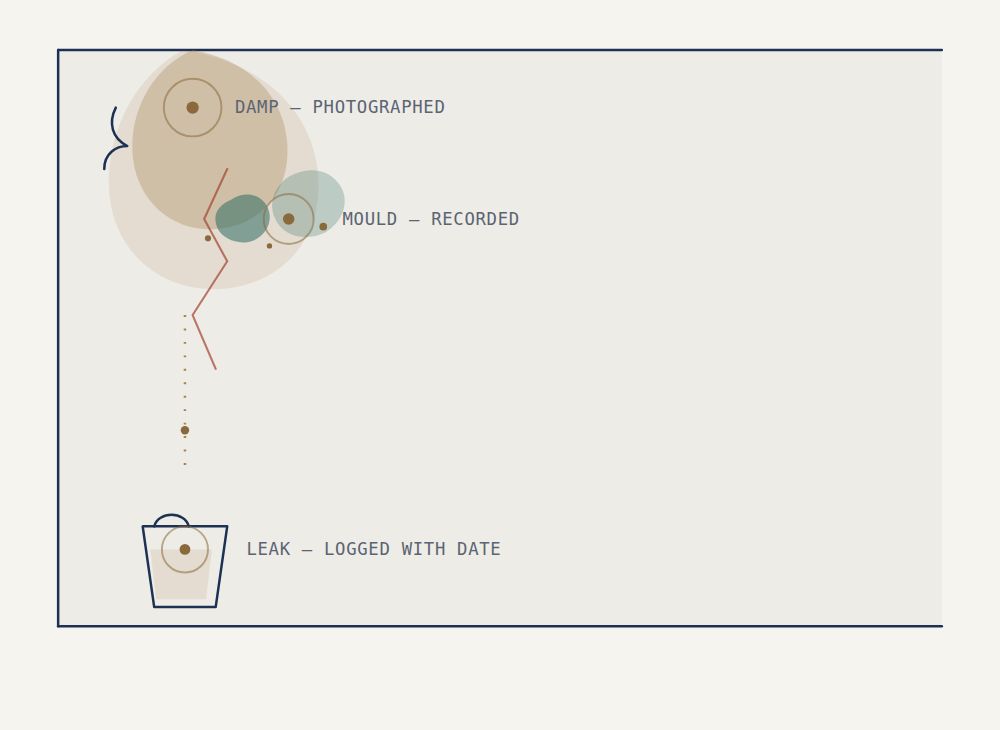
Mould & dampness
Persistent mould, damp and condensation can make a home unpleasant and potentially unsafe. Where a landlord has been made aware of serious damp or mould problems and has failed to take appropriate action, the tenant may have grounds to pursue a housing disrepair claim.
- Compensation for qualifying inconvenience and distress
- Damage to personal belongings caused by the disrepair
- In some circumstances, health-related impacts where legally supported
- Costs or losses directly connected to the disrepair
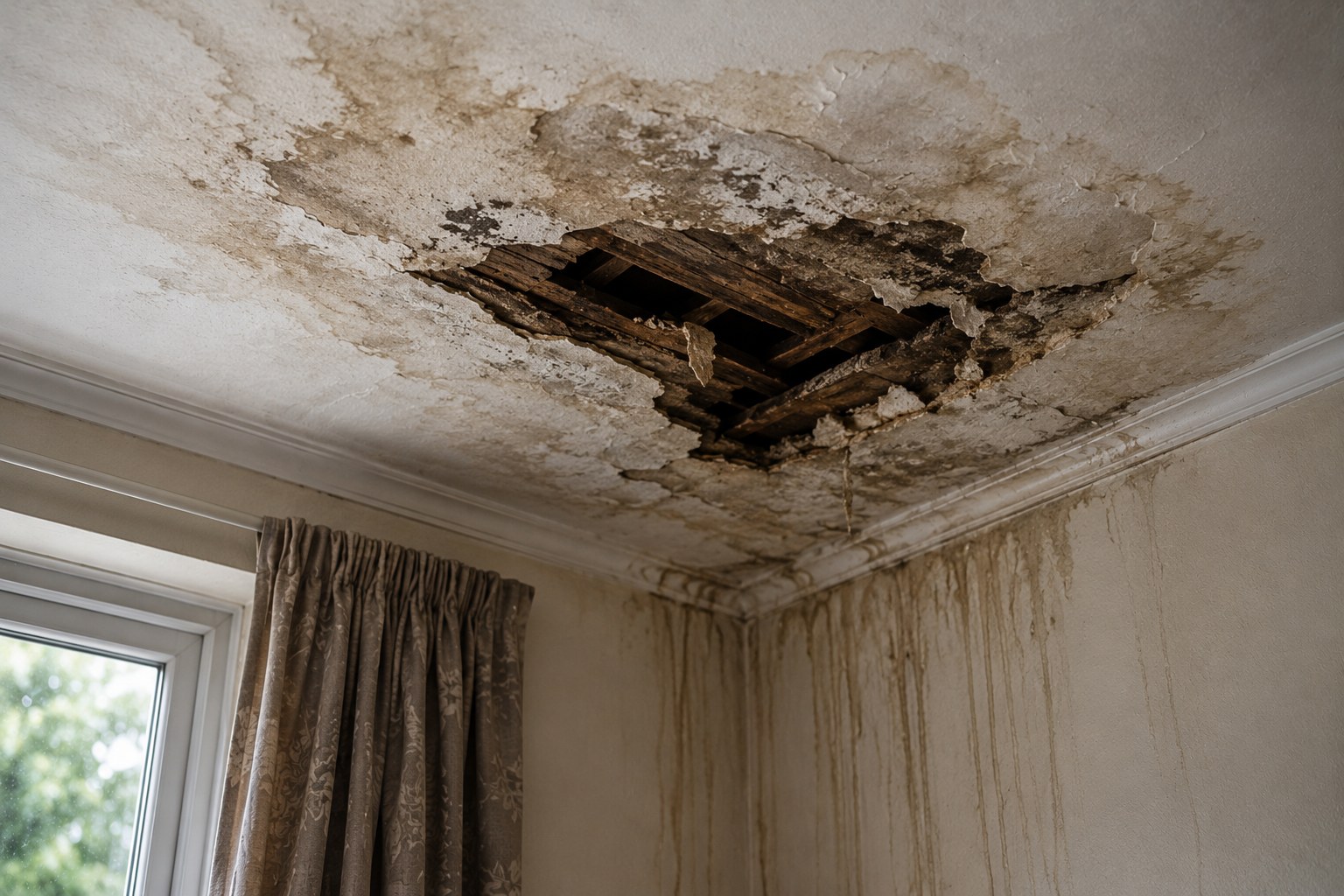
Leaks & water damage
Leaking pipes, ceilings, roofs and water ingress can cause serious damage to a property. If problems have been reported and appropriate repairs have not been carried out within a reasonable period, the circumstances may warrant further investigation.
- Compensation relating to qualifying disrepair
- Damage to furniture, clothing or other belongings
- Loss or damage caused by water ingress
- Inconvenience and distress where applicable
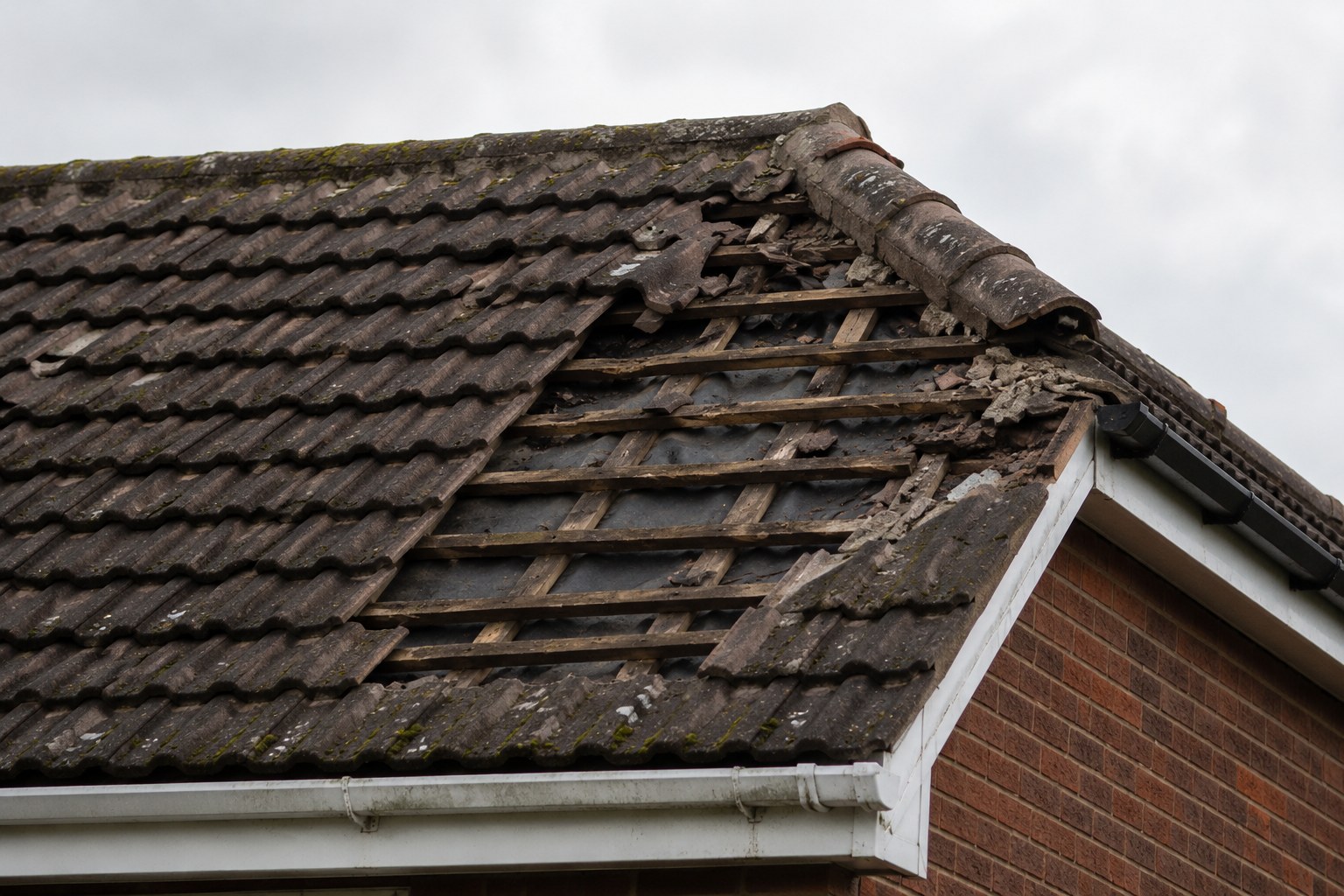
Roof damage & missing tiles
Missing, broken or defective roof tiles can allow rainwater into a property and may lead to leaks, damp and internal damage.
- Compensation for qualifying housing disrepair
- Consequential damage caused by leaks
- Damage to personal possessions where applicable
- Inconvenience caused by unresolved defects
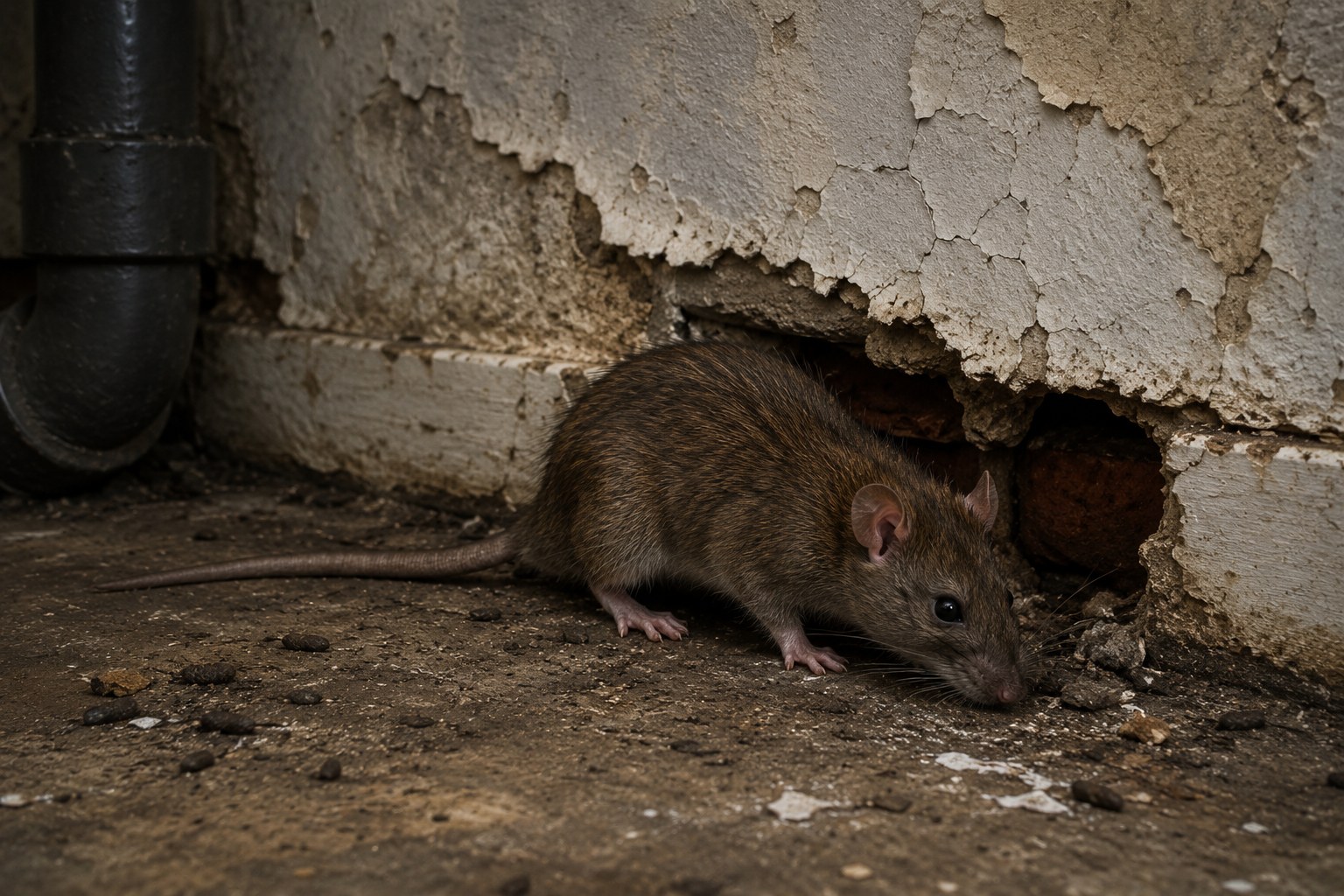
Pests & rodent problems
Rat or other pest infestations can be associated with defects in a property, communal areas, drainage or other conditions that may be the landlord's responsibility to address. Responsibility depends on the cause of the infestation and the individual circumstances.
- Compensation where qualifying disrepair or infestation has not been properly addressed
- Damage to belongings caused by pests
- Inconvenience and distress where applicable
- Reasonable losses directly connected to the problem
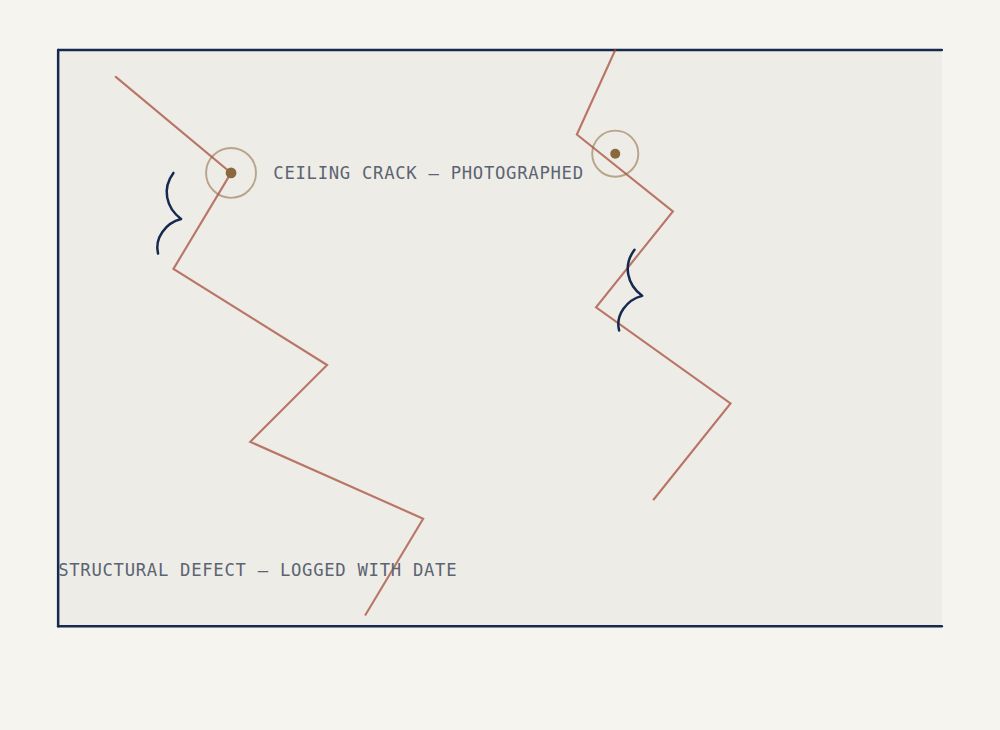
Damaged ceilings & structural problems
Cracked, damaged, collapsing or water-damaged ceilings and other structural defects can require urgent attention, particularly where they create a safety concern.
- Compensation relating to qualifying disrepair
- Damage to belongings
- Inconvenience and distress
- Reasonable losses resulting from the unresolved defect
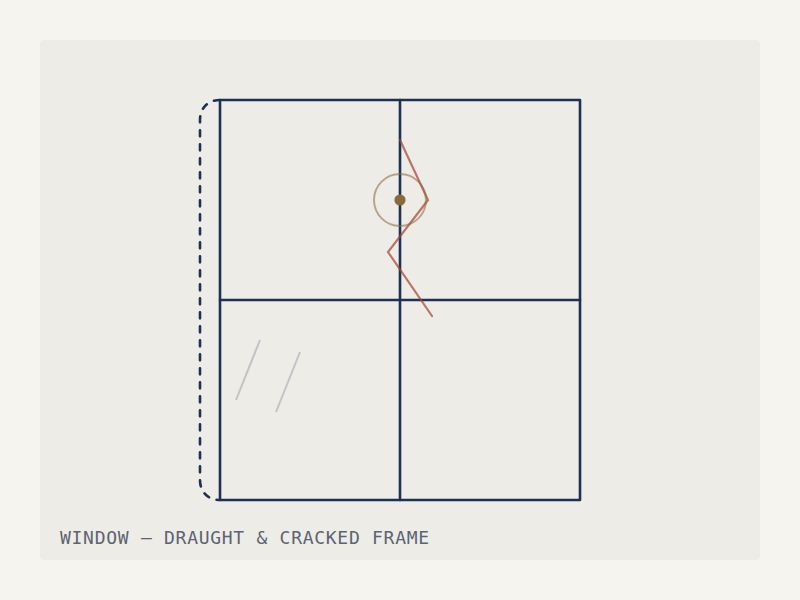
Windows & doors
Broken, defective or poorly sealed windows and doors can cause water ingress, draughts, damp, security problems and poor living conditions.
- Compensation where the defect amounts to qualifying disrepair
- Damage caused by water ingress or other defects
- Inconvenience and distress
- Reasonable losses directly connected to the problem
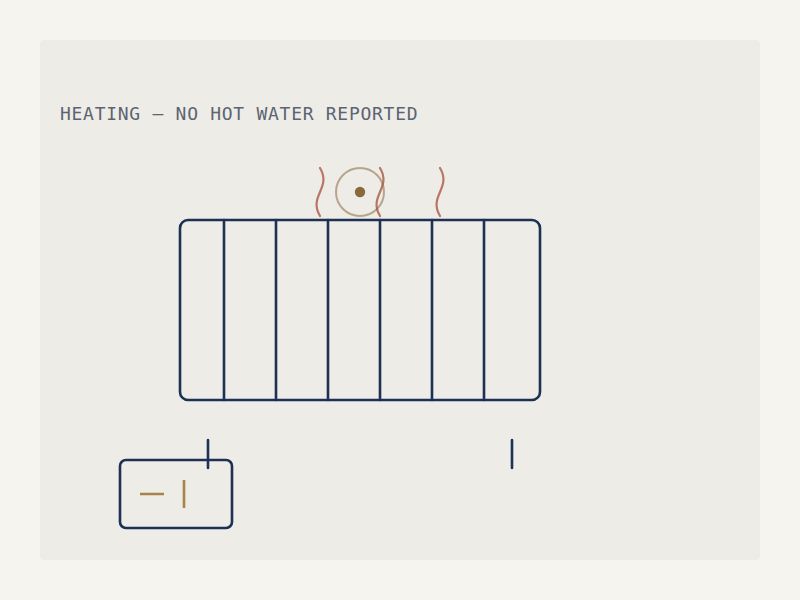
Heating & hot water
A lack of adequate heating or hot water can seriously affect living conditions, particularly during colder periods.
- Compensation where qualifying disrepair is established
- Inconvenience and distress
- Reasonable losses caused by the lack of heating or hot water
- Other losses where supported by the circumstances
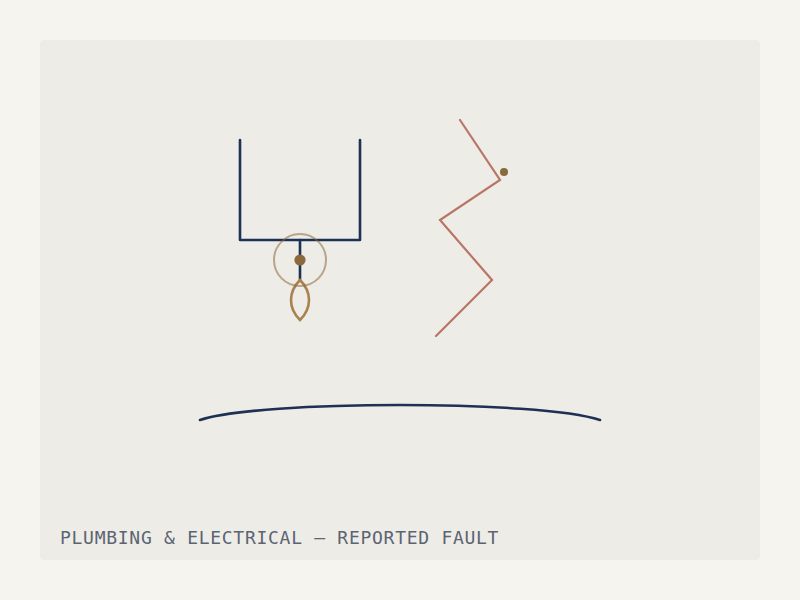
Electrical problems
Faulty sockets, unsafe wiring, defective electrical installations and other electrical problems should be taken seriously and reported promptly.
- Compensation where qualifying disrepair is established
- Damage or losses caused by the defect
- Inconvenience and distress where applicable
- Other reasonable losses supported by evidence
Disrepair Solutions Group provides housing disrepair support and case referral services. We are not a law firm and do not provide legal advice. Whether a tenant has a valid claim, and what compensation may be available, depends on the individual circumstances and applicable law. Eligible cases may be referred to an appropriate legal professional for independent assessment.
What evidence can help
These are the kinds of information that typically help build a clear picture of a repair problem. This list is for guidance only — it does not guarantee that any particular piece of evidence will support a claim.
- Photographs of the affected area
- Videos, where appropriate and with consent
- Dates the issue was first reported to the landlord
- Copies of correspondence with the landlord or agent
- Repair reference numbers, if issued
- Basic tenancy information
- Records of any inspection or repair visits
- Any other relevant supporting documents
Start documenting your situation
Tell us what's happening — it only takes a few minutes.
Check your property →